White-Label Custom Apparel for Agencies: How to Outsource Production Without Losing Your Client's Trust
White-label custom apparel lets marketing agencies expand their offerings and deepen client relationships by outsourcing production to a trusted print partner, all without ever compromising the client experience. The right production partner handles everything behind the scenes so your agency gets the credit and your clients get results.
Quick Answer
White-label custom apparel allows marketing agencies, branding firms, and creative shops to outsource the production of branded clothing and merchandise to a print partner while delivering the finished product under their own name or their client's brand. The key to outsourcing production without losing client trust is choosing a reliable, full-service print shop that offers consistent quality, transparent communication, flexible order sizes, and the ability to handle everything from screen printing and embroidery to folding, bagging, tagging, and shipping. When your production partner operates behind the scenes and delivers on time with zero quality issues, your client never has to know how the sausage gets made. They just see results.
What Is White-Label Custom Apparel?
White-label apparel refers to garments and branded products that are manufactured and decorated by one company but sold or delivered under another company's name. In the context of marketing agencies, this means you source, produce, and fulfill custom apparel for your clients through a third-party print partner, but the end product carries your client's branding, not the printer's.
This model is common across the promotional products and branded merchandise industry. Agencies of all sizes use white-label production partners to offer their clients custom t-shirts, polos, hats, jackets, hoodies, bags, and promotional items without investing in their own printing equipment, warehouse space, or production staff.
The value proposition for agencies is straightforward: you focus on the creative strategy, client relationships, and project management while your production partner handles the physical manufacturing and fulfillment. Done well, white-label apparel production lets you expand your service offerings, increase revenue per client, and deliver tangible branded products without adding operational complexity to your business.
Why Marketing Agencies Should Offer Custom Apparel
If your agency handles branding, events, corporate identity, or promotional campaigns, custom apparel is a natural extension of the services you already provide. Branded merchandise is one of the most effective ways for businesses to increase visibility, build team culture, and create memorable experiences at events and trade shows.
It Deepens Client Relationships
When you can handle a client's apparel and merchandise needs alongside their marketing strategy, you become a more valuable partner. Instead of sending clients to find their own printer for company shirts, event giveaways, or employee onboarding kits, you offer a complete solution. This creates stickier relationships and reduces the chance that a competitor agency picks up a piece of the business.
It Creates a New Revenue Stream
Custom apparel carries healthy margins for agencies, especially when you have a production partner with competitive pricing. You set your own markup, manage the client relationship, and let the printer handle the heavy lifting. For agencies already managing brand guidelines and creative assets, adding merchandise to the mix requires minimal additional effort on the front end.
It Strengthens Brand Campaigns
Physical products create a connection that digital marketing alone cannot replicate. A well-designed branded hoodie worn by an employee or a screen printed event tee handed out at a conference extends your client's brand into the real world. These items have staying power, often remaining in rotation for months or years after the initial campaign.
The Biggest Risk: Quality and Consistency
The challenge with outsourcing production is that your agency's reputation rides on someone else's work. If a print job comes back with misaligned logos, inconsistent colors, or cheap-feeling garments, your client does not blame the printer they have never met. They blame you.
This is why choosing the right production partner is the single most important decision an agency can make when offering white-label apparel services. The partner you select needs to meet the same standards you hold for your own creative work: attention to detail, consistency across orders, and a commitment to getting it right the first time.
Quality failures in outsourced apparel production typically fall into a few categories.
Print quality issues include colors that do not match brand guidelines, logos that are off-center or poorly aligned, ink that cracks or peels after a few washes, and embroidery that is loose or inconsistent across garments. Garment issues include blanks that feel cheap, shrink excessively after washing, or do not match the weight and feel that was promised. Fulfillment problems include late deliveries, incorrect quantities, wrong sizes in the shipment, and poor packaging that damages products in transit.
Any one of these issues can erode client trust. Preventing them starts with partnering with a production company that has the experience, equipment, and quality control processes to deliver reliably at scale.
What to Look for in a White-Label Production Partner
Not every print shop is set up to support agency partnerships. A good white-label partner operates differently than a shop that simply takes one-off orders from walk-in customers. Here are the qualities that matter most.
Full-Service Production Capabilities
The more services your production partner offers under one roof, the fewer vendors you need to coordinate and the lower the risk of inconsistency. Look for a shop that can handle screen printing, embroidery, heat press, laser engraving, and promotional products all in the same facility.
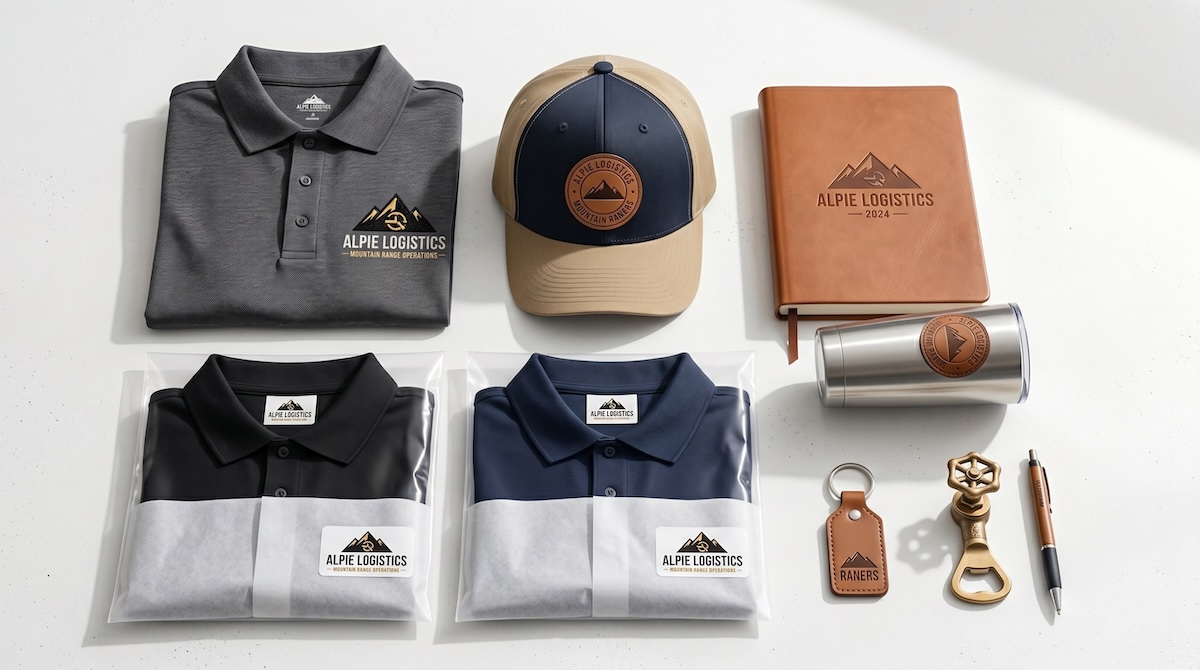
Six Stitch Apparel is a strong example of this model. As a full-service print shop with facilities in Dallas, Texas and Nashville, Tennessee, they offer screen printing, embroidery, laser engraving, promotional products, custom patches, and a range of finishing services including folding, bagging, and tagging. For agencies managing multi-product campaigns, having a single production partner that can handle t-shirts, embroidered polos, engraved leather goods, and promotional items in one order simplifies the entire process.
Consistent Quality Control
Ask potential partners about their quality control process. How do they ensure that the 500th shirt in a run looks identical to the first? Do they inspect finished goods before shipping? How do they handle color matching to brand guidelines? A production partner with strong internal quality standards saves you from having to inspect every order yourself.
Willingness to Stay Behind the Scenes
A true white-label partner understands that their name does not appear anywhere in the process. Shipments should arrive without the printer's branding. Packing slips and invoices should be neutral or customizable. Communication with your end client should go through your agency, not directly from the printer. This invisible partnership is what allows you to maintain full ownership of the client relationship.
Flexible Order Sizes
Agency work is unpredictable. One month you might need 50 embroidered polos for a client's management team. The next month you could be ordering 2,000 screen printed tees for a product launch. Your production partner needs to handle both ends of that spectrum without punishing you with unreasonable minimums on smaller orders or struggling to scale up for larger runs.
Reliable Turnaround and Shipping
Deadlines in agency work are non-negotiable. If your client needs branded shirts for a conference that starts on a specific date, there is no margin for late production. Choose a partner with a track record of on-time delivery and the shipping infrastructure to get products where they need to go. Six Stitch Apparel ships daily across the United States via UPS, which gives agencies confidence that orders will arrive when and where they are expected.
How to Structure the Agency-Printer Relationship
Building a successful white-label partnership requires more than just finding a good printer. It requires establishing clear processes, communication channels, and expectations from the start.
Define Your Workflow
Map out exactly how orders will flow from your client through your agency to your production partner. A typical workflow looks like this: your client submits a request or approves a concept, your team finalizes the design and specs, you send the order to your production partner with detailed instructions, the partner produces and ships the finished product, and your agency confirms delivery with the client.
The more clearly you define this workflow up front, the less room there is for miscommunication and errors.
Provide Detailed Specifications
Your production partner is only as good as the information you give them. Every order should include finalized artwork files in the correct format (typically vector files for screen printing and embroidery), exact color references (Pantone or PMS numbers whenever possible), garment selection details including brand, style number, color, and sizes, decoration method and placement instructions, and packaging and shipping requirements.
Vague instructions lead to assumptions, and assumptions lead to mistakes. The more precise your order specs, the more consistent your results.
Establish a Proofing Process
For new designs or first-time orders, request a physical or digital proof before full production begins. This step catches potential issues with logo placement, color matching, and garment fit before they become expensive problems at scale. A good production partner will welcome this step because it protects both parties.
Maintain Open Communication
The best agency-printer relationships are built on direct, honest communication. Your production partner should be easy to reach, responsive to questions, and proactive about flagging potential issues before they become problems. If a garment is backordered, a color is unavailable, or a deadline is at risk, you need to know immediately so you can manage your client's expectations.
Building Trust with Your Clients Through Reliable Execution
Your clients do not need to know the details of your production process. What they care about is receiving high-quality branded products, on time, that match their expectations. Here is how to consistently deliver on that promise.
Set Realistic Timelines
One of the fastest ways to damage client trust is overpromising on delivery dates. Build buffer time into your project timelines to account for production, shipping, and any unforeseen delays. Standard apparel production typically takes two to four weeks depending on the method and order size. Communicate these timelines clearly to your client from the start, and they will appreciate the transparency.
Present Samples Early
Whenever possible, show your client a physical sample of the finished product before committing to a full production run. This is especially important for new clients, new garment styles, or complex designs. A sample eliminates guesswork and gives your client confidence that the final product will meet their expectations.
Document Everything
Keep records of every order including artwork files, garment specs, quantities, delivery dates, and any client feedback. This documentation makes reorders seamless and ensures consistency across repeat orders over time. A well-organized agency that can reproduce a client's branded apparel identically months or years later earns long-term trust.
Own Problems Quickly
Even with the best production partner, occasional issues will arise. A garment may be slightly off-spec, a delivery may arrive a day late, or a size run may be short. When this happens, own the problem immediately, communicate a solution to your client, and work with your production partner to make it right. Clients do not expect perfection every time, but they do expect accountability and fast resolution.
Expanding Your Offerings Beyond Basic Apparel
Once you have a reliable production partner in place, you can expand your white-label merchandise offerings well beyond standard t-shirts and polos. This is where the real value of a full-service partner becomes clear.
Corporate Uniform Programs
Help your clients outfit their entire team with branded uniforms, including embroidered dress shirts, screen printed work tees, branded jackets, and custom hats. Uniform programs represent recurring revenue for your agency and ongoing production work for your print partner.
Event and Trade Show Merchandise
From branded giveaways and staff apparel to signage and promotional products, events are a major opportunity for agencies to deliver value through physical merchandise. Having a production partner that can handle apparel, flags, banners, water bottles, tumblers, and other promotional items in a single order keeps the process manageable.
Employee Onboarding and Welcome Kits
Curated kits that include branded apparel, drinkware, notebooks, and other items are increasingly popular for new hire onboarding. These kits reinforce company culture from day one and give agencies an opportunity to showcase their creative and logistical capabilities.
Online Company Stores
Some production partners can support online stores that allow your client's employees, members, or customers to order branded merchandise on demand. This service turns a one-time apparel order into an ongoing program that generates consistent revenue for your agency and your print partner.
Six Stitch Apparel offers online store management and product fulfillment as part of their service lineup, making it possible for agencies to set up a branded storefront for their clients without managing inventory or shipping logistics directly.
Custom Patches and Specialty Items
For clients who want something beyond standard screen printing and embroidery, specialty items like custom patches (leather, embroidered, printed, rubber, and 3D options), laser-engraved accessories, and puff embroidery add a premium touch to any merchandise program. These are the kinds of details that make your agency's work stand out and justify the value of a managed apparel service.
Pricing Your White-Label Apparel Services
Pricing is where many agencies get tripped up. You need to cover your production costs, account for your time and project management effort, and deliver value to your client, all while remaining competitive.
Understand Your Cost Structure
Your production partner will quote you a per-unit price that includes the garment blank and the decoration (printing, embroidery, etc.). On top of that, factor in any finishing services (folding, bagging, tagging), shipping costs, and your agency's project management time.
Apply a Reasonable Markup
Most agencies mark up production costs between 20 and 50 percent, depending on the complexity of the project, the level of creative involvement, and the value of the relationship. Simpler reorders with minimal agency involvement may warrant a lower markup, while complex campaigns requiring design work, sampling, and multi-location shipping justify a higher margin.
Be Transparent About Value
You do not need to disclose your production costs to your clients. What you should communicate is the value you bring: sourcing the right products, managing the design and approval process, quality control, project management, and on-time delivery. Clients are paying for the convenience and reliability of having a single partner handle their branded merchandise from concept to completion.
Why the Right Production Partner Changes Everything
The difference between an agency that successfully offers white-label apparel and one that struggles with it almost always comes down to the production partner. A reliable, full-service printer with strong communication, consistent quality, and flexible capabilities transforms branded merchandise from a headache into a competitive advantage for your agency.
Companies like Six Stitch Apparel, with their family-owned approach to customer care, full-service production capabilities, and nationwide shipping, are the kind of partner that agencies can build long-term relationships with. When your printer treats every order with the same attention to detail you give your client's brand, the trust flows all the way through the chain.
Frequently Asked Questions
What does white-label mean in the context of custom apparel?
White-label custom apparel means that a third-party production company manufactures and decorates the garments, but the finished products carry your client's branding rather than the printer's. The production partner stays behind the scenes, allowing agencies and resellers to deliver branded merchandise as part of their own service offering without operating a print shop themselves.
How do I make sure the quality is consistent when I outsource apparel production?
Start by choosing a production partner with strong quality control processes and request samples before committing to large orders. Provide detailed specifications for every order, including vector artwork, Pantone color references, and exact garment details. Establish a proofing step for new designs, and maintain clear communication with your printer about expectations and standards. A reliable partner will flag potential issues before they reach your client.
What services should a white-label apparel partner offer?
At a minimum, look for a partner that offers screen printing, embroidery, and heat press capabilities. Ideally, they should also handle promotional products, custom patches, laser engraving, and finishing services like folding, bagging, and tagging. The more services available under one roof, the fewer vendors you need to manage and the more consistent your results will be across product types.
How much should an agency mark up white-label apparel?
Markups typically range from 20 to 50 percent depending on the complexity of the project, the creative work involved, and the overall scope of the client relationship. Simple reorders may fall on the lower end, while full-service campaigns that include design, sampling, multi-product coordination, and logistics management warrant margins at the higher end. The markup should reflect the value your agency adds to the process, not just the cost of the goods.
Can a small agency realistically offer white-label apparel services?
Absolutely. One of the biggest advantages of the white-label model is that it requires no upfront investment in equipment, facilities, or inventory. A small agency with even a handful of clients can begin offering branded apparel by partnering with a full-service print shop that accepts flexible order sizes. As your client base and order volume grow, the production partner scales with you. The key is finding a reliable partner, like Six Stitch Apparel, that treats smaller orders with the same care and attention as larger production runs.