Custom Company Uniforms: Picking the Right Fabrics, Print Methods, and Vendor
A tour merch company does far more than print t-shirts, managing everything from production and inventory to shipping logistics and online fulfillment so artists can stay focused on performing. Finding the right partner comes down to production quality, turnaround speed, and a team that genuinely understands life on the road.
Quick Answer
Choosing the right custom company uniforms comes down to three decisions: fabric, print method, and vendor. For most businesses, a polyester-cotton blend (often 65/35 or 50/50) offers the best balance of comfort, durability, and easy care. Screen printing is ideal for large, consistent orders with bold designs, while embroidery delivers a premium, long-lasting look for logos on polos, jackets, and hats. The right vendor should offer multiple decoration methods under one roof, work with you on garment selection, and deliver consistent quality at scale. Getting these three elements right ensures your team looks professional, stays comfortable, and represents your brand well every single day.
Why Custom Uniforms Matter for Your Business
Company uniforms do more than create a consistent look across your team. They serve as a daily extension of your brand, communicating professionalism, trust, and cohesion to every customer, client, or visitor who interacts with your employees.
Well-designed uniforms also have an internal impact. Employees who feel good in what they wear tend to carry themselves with more confidence on the job. Studies in the corporate apparel space have consistently shown that uniform programs can improve team morale, reduce daily decision fatigue around what to wear, and even contribute to lower employee turnover when the garments are comfortable and well made.
From a marketing perspective, every employee wearing your logo becomes a walking ambassador for your brand. Whether your team is working a trade show floor, meeting clients on-site, or simply grabbing lunch in the neighborhood, branded uniforms keep your company visible without spending a dime on advertising.
The key to getting all of these benefits, though, is making the right choices on fabric, decoration, and who produces them.
How to Choose the Right Fabric for Company Uniforms
The fabric you select determines how your uniforms feel, how long they last, and how they look after months of regular wear and washing. There is no single "best" fabric for every business. The right choice depends on your work environment, your employees' daily tasks, and the image you want to project.
Polyester-Cotton Blends
The most popular fabric for custom uniforms across industries is the polyester-cotton blend, often called poly-cotton. A common ratio is 65% polyester and 35% cotton, though 50/50 and 60/40 blends are also widely used.
This blend combines the natural softness and breathability of cotton with the durability, wrinkle resistance, and color retention of polyester. The result is a garment that holds up well to frequent laundering, resists shrinking and fading, and stays comfortable throughout a full workday. Poly-cotton is compatible with virtually every decoration method, making it an excellent all-around choice for businesses ordering screen printed or embroidered uniforms.
Best for: corporate offices, retail, restaurants, hospitality, schools, and healthcare settings.
100% Cotton
Pure cotton is the softest and most breathable option, making it ideal for indoor environments or roles where comfort is the top priority. Cotton absorbs moisture well and feels natural against the skin, which employees tend to appreciate during long shifts.
The trade-off is that cotton wrinkles more easily, is prone to shrinking if not washed properly, and does not retain color as long as polyester blends. Cotton uniforms may also require more frequent replacement in high-wear environments. However, for businesses that prioritize a natural feel and are willing to manage the extra care, cotton remains a strong choice.
Best for: light-duty indoor roles, hospitality front-of-house, and wellness or spa environments.
100% Polyester and Performance Fabrics
For teams that work outdoors, in physically demanding roles, or in hot climates, performance polyester is worth considering. Modern polyester knits are engineered to wick moisture away from the body, dry quickly, and resist fading even after extended sun exposure. They hold their shape well and require very little maintenance.
Performance polyester has come a long way from the stiff, plasticky feel it was known for decades ago. Today's versions are softer, more breathable, and available in a wide range of weights and textures. Some even mimic the feel of cotton while delivering superior durability.
Best for: outdoor crews, warehouse and manufacturing teams, athletic and recreation staff, and delivery drivers.
Twill Weave Fabrics
Beyond fiber content, the weave of the fabric matters too. Twill is a popular weave for work uniforms because of its diagonal rib pattern, which creates a dense, sturdy fabric that resists snagging and hides stains better than smoother weaves. Cotton twill and poly-cotton twill are both common choices for work pants, jackets, and heavier-duty shirts.
Best for: construction, manufacturing, maintenance, and any role where durability and stain resistance are priorities.
Oxford Cloth
Oxford cloth uses a basket weave that produces a soft, textured fabric with a slightly more refined appearance. It is breathable, durable, and works well for both casual and business-casual uniform programs. Oxford cloth button-downs are a classic choice for office and retail settings where you want a polished but not overly formal look.
Best for: corporate offices, retail, education, and customer-facing roles.
Understanding Print and Decoration Methods
Once you have selected your fabric, the next decision is how to apply your logo, design, or branding. Each decoration method has strengths and limitations, and the best choice depends on your design complexity, garment type, order size, and budget.
Screen Printing
Screen printing is the most widely used method for decorating custom apparel. It works by pushing ink through a mesh screen onto the fabric, one color at a time. Each color in the design requires a separate screen, so simpler designs with fewer colors tend to be the most cost-effective.
Screen printing produces vibrant, durable results that hold up exceptionally well to repeated washing. It is the go-to method for large uniform orders where consistency across every garment is essential. The per-unit cost drops significantly at higher quantities, making it the most economical option for businesses ordering in bulk.
The ink bonds deeply with cotton and cotton-blend fabrics, producing a smooth finish that becomes part of the garment rather than sitting on top of it. For uniforms that will be washed frequently and worn daily, screen printing offers some of the best longevity of any decoration method.
Best for: large orders, bold logos, one- to four-color designs, and t-shirts, polos, and work shirts.
Embroidery
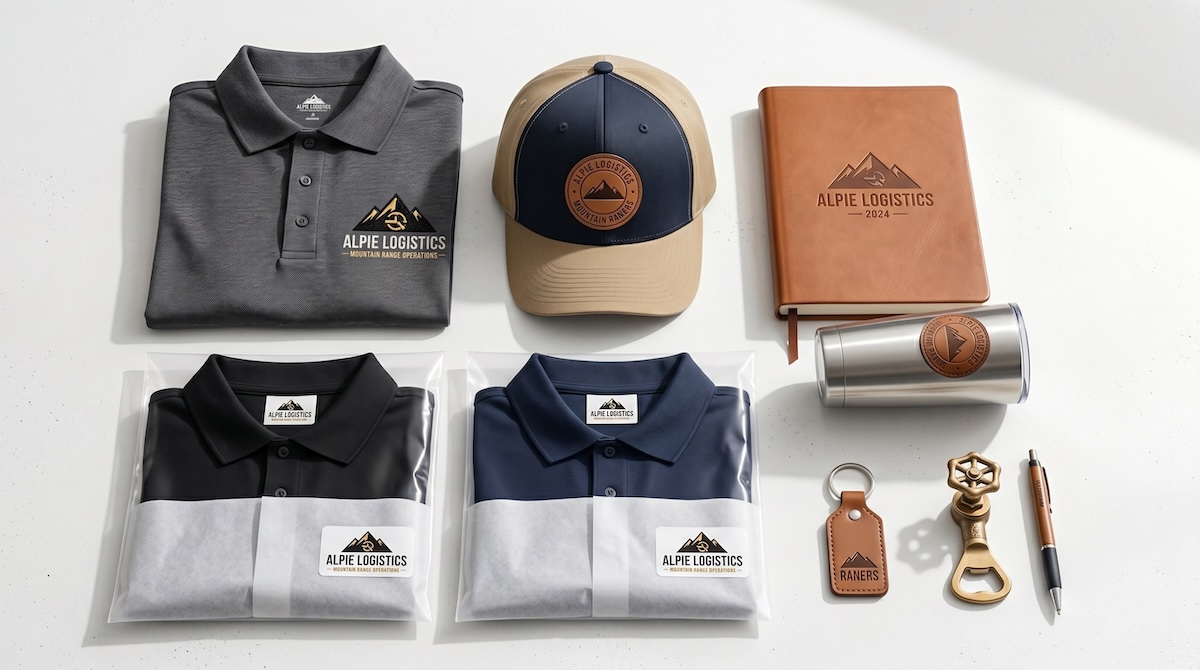
Embroidery stitches your logo or design directly into the fabric using thread, creating a textured, premium finish that immediately elevates the look of any garment. It is the preferred method for polos, button-down shirts, jackets, hats, and any uniform where you want a polished, professional appearance.
Embroidered logos are extremely durable. Because the design is physically stitched into the fabric, it will not crack, peel, or fade over time. This makes embroidery an excellent long-term investment for uniform programs where garments need to maintain their appearance through hundreds of wash cycles.
Embroidery works best for small to medium-sized logos and text. Very large or highly detailed designs can become stiff and heavy when embroidered, so it is typically reserved for chest logos, sleeve details, and hat fronts. For businesses that want a clean, high-end look on their uniforms, embroidery is hard to beat.
Companies like Six Stitch Apparel specialize in high-quality embroidery alongside screen printing, laser engraving, and other decoration methods, giving businesses the flexibility to mix and match techniques across their uniform program.
Best for: polos, dress shirts, jackets, hats, and any garment where a premium look is important.
Heat Press and Vinyl Transfers
Heat press transfers use heat and pressure to bond a printed design or cut vinyl onto the fabric surface. This method is versatile and works well for names, numbers, and smaller runs where setting up screens would not be cost-effective.
Heat transfer is commonly used for individual employee names on uniforms, sports jerseys, and short-run custom orders. It offers good detail and color accuracy, though the durability can vary depending on the quality of the transfer material and the application process.
Best for: individual names and numbers, small orders, and multi-color designs on performance fabrics.
Direct-to-Film (DTF) Transfers
DTF is a newer technology that prints designs onto a special film, applies an adhesive powder, and then heat-presses the transfer onto the garment. It delivers vibrant, full-color results on a wide range of fabrics, including cotton, polyester, and blends, without the setup costs of traditional screen printing.
DTF has gained significant traction in recent years because it bridges the gap between screen printing and digital methods. It works well for both small and medium-sized orders and handles detailed, multi-color artwork with ease. The finish is soft, flexible, and holds up well through washing.
Best for: complex multi-color designs, medium-sized orders, and situations where you need flexibility across different fabric types.
Laser Engraving
While not a traditional "printing" method, laser engraving is an option for certain uniform accessories and branded items. It works by using a laser to etch designs into materials like leather, wood, metal, and some fabrics, producing a clean, permanent mark.
For uniform programs, laser engraving is most commonly used on leather patches, name badges, belt buckles, and promotional accessories that complement the main uniform. Six Stitch Apparel offers laser engraving as part of their full-service capabilities, making it easy to add custom-engraved elements to a uniform package without sourcing a separate vendor.
Best for: leather patches, name tags, accessories, and branded promotional items.
How to Choose the Right Uniform Vendor
The vendor you choose can make or break your uniform program. A great vendor simplifies the process, delivers consistent quality, and becomes a long-term partner you can rely on as your team grows. Here is what to evaluate when making your decision.
Look for Full-Service Capabilities
The fewer vendors you have to coordinate, the smoother your uniform program will run. Look for a company that offers multiple decoration methods, including screen printing, embroidery, and heat press, so you can handle different garment types and design needs through a single provider.
Six Stitch Apparel, for example, is a full-service print shop with capabilities in screen printing, embroidery, laser engraving, and promotional products. With facilities in both Dallas, Texas and Nashville, Tennessee, they serve businesses across the country and ship daily via UPS. Having all of those services under one roof means fewer points of contact, faster turnaround, and more consistent branding across every piece of your uniform program.
Evaluate Garment Sourcing and Selection
A good vendor does not just decorate the garments you hand them. They should also help you select the right blanks for your specific needs, taking into account your work environment, budget, and the decoration methods that will be used. The wrong garment and print combination can lead to poor results, so a vendor with experience in garment selection adds real value to the process.
Prioritize Quality and Consistency
Request samples before placing a large order. Examine the print clarity, stitch quality, garment feel, and overall craftsmanship. For uniform programs, consistency is critical because every employee's garment needs to look the same. Ask your vendor about their quality control processes, especially for larger orders that may be produced in batches over time.
Consider Turnaround Time and Flexibility
Uniform needs change. You hire new employees, update your logo, add seasonal items, or need rush reorders when inventory runs low. Your vendor should be able to accommodate reorders quickly and adjust to changes in your program without long lead times or excessive minimums.
Ask About Additional Services
Many uniform programs require more than just printing and embroidery. Services like folding, bagging, tagging, individual packaging, and direct shipping to multiple locations can save your team significant time and effort. A vendor that handles these finishing and fulfillment steps keeps the process simple and professional from start to finish.
Six Stitch Apparel offers folding, bagging, and tagging services as part of their production workflow, which is particularly helpful for businesses distributing uniforms across multiple offices or job sites.
Check Their Track Record with Businesses Like Yours
Not every print shop has experience with corporate uniform programs. Some specialize in one-off custom orders or event merchandise. Ask potential vendors about their experience working with businesses in your industry and at your scale. A vendor that regularly handles mid-size and large company uniform orders will better understand the specific requirements around sizing runs, reorder schedules, and brand consistency.
Common Mistakes to Avoid with Custom Uniforms
Even businesses with the best intentions can run into issues with their uniform programs. Here are a few common pitfalls and how to avoid them.
Choosing the cheapest garment available often leads to higher costs in the long run. Low-quality blanks break down faster, fade sooner, and need to be replaced more often. Investing in a slightly better garment up front typically reduces your total cost over the life of the uniform program.
Ignoring employee comfort is another frequent mistake. Uniforms that are stiff, poorly fitting, or made from the wrong fabric for the work environment lead to complaints and low compliance. Whenever possible, involve a few employees in the garment selection process by ordering samples in different fabrics and fits for them to try.
Overcomplicating the design can also cause problems. A logo with too many colors, fine details, or gradients may not translate well to every decoration method. Work with your vendor to simplify artwork for production without losing the essence of your brand.
Finally, failing to plan for reorders catches many businesses off guard. Make sure your vendor keeps your artwork on file and can fulfill reorders quickly as your team grows or garments need replacing.
Building a Complete Uniform Program
A well-rounded uniform program often includes more than just shirts. Consider building a cohesive look with multiple branded items that employees can mix and match based on their role, season, and work environment.
A typical corporate uniform program might include embroidered polos or button-downs for customer-facing roles, screen printed t-shirts for warehouse or production staff, branded jackets or outerwear for outdoor teams, embroidered or printed hats, and custom patches or name tags for added personalization.
By working with a single full-service vendor, you can ensure that your logo looks consistent across every item, regardless of the decoration method used. This kind of brand consistency is what separates a polished, professional uniform program from a collection of mismatched branded clothing.
Companies like Six Stitch Apparel, which offer screen printing, embroidery, laser engraving, promotional products, and custom patches all in-house, make it possible to build an entire uniform program through one point of contact. That simplicity matters when you are managing uniforms for a growing team.
Frequently Asked Questions
What is the best fabric for custom company uniforms?
For most businesses, a polyester-cotton blend in a 65/35 or 50/50 ratio offers the best combination of comfort, durability, wrinkle resistance, and color retention. Pure cotton is softer and more breathable but requires more care and may not hold up as well to frequent industrial laundering. Performance polyester is the best choice for outdoor or physically demanding work environments where moisture wicking and quick drying are important.
Should I choose screen printing or embroidery for uniform logos?
It depends on the garment type, logo size, and the look you want to achieve. Embroidery is ideal for polos, jackets, hats, and dress shirts where you want a professional, textured finish. Screen printing is better suited for t-shirts and larger designs where vibrant color and cost efficiency at scale are priorities. Many businesses use both methods within the same uniform program, applying embroidery to customer-facing garments and screen printing to everyday work shirts.
How many uniforms should I order per employee?
A common recommendation is three to five uniforms per employee, depending on the number of days per week they work and how frequently the garments will be laundered. Employees in physically demanding or outdoor roles may need more due to heavier wear and more frequent washing. Always order a small buffer of extra garments in common sizes to accommodate new hires and replacements.
What should I look for when choosing a uniform vendor?
Look for a vendor that offers multiple decoration methods (screen printing, embroidery, heat press), has experience working with businesses at your scale, provides garment selection guidance, and can handle finishing services like folding, bagging, and tagging. Consistent quality, reasonable turnaround times, and the ability to fulfill reorders quickly are also essential. A full-service provider like Six Stitch Apparel simplifies the process by keeping everything under one roof.
How long does it take to produce custom company uniforms?
Standard production timelines typically range from two to four weeks, depending on the order size, decoration method, and garment availability. Screen printing and embroidery both require artwork setup before production begins, so submitting finalized designs early helps avoid delays. Rush orders are sometimes available, but planning ahead gives your vendor the best opportunity to deliver consistent, high-quality results.